


| TenSigns That You MayHave aThyroid
Problem Astrologer Vighnesh It is believed that up to 59 million people suffer from a thyroid problem in the USA alone, yet estimates suggest that up to 60% of sufferers are not even aware that they have an issue. This is believed to be because the signs and symptoms are so common they are easily ignored, misdiagnosed or attributed to every day problems we all suffer from. If you have a thyroid problem it can affect all parts of your wellbeing and it is important that you are aware of the symptoms so that you can ask your doctor to test your thyroid and discuss treatment options. | |
What is the Thyroid?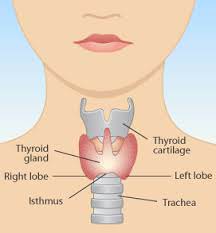
The thyroid is a small, butterfly shaped gland in the neck that is essential for regulating the body's metabolism, or the way that it produces energy. Its role contributes to the effective functioning of a number of important organs, including the brain, liver, kidneys and skin. It also affects critical functions of the body, such as energy levels and heart rate. Put simply, your body's overall health is hugely dependent on a healthy, functioning thyroid. If there is something wrong, it can affect your emotional, physical and mental wellbeing in numerous ways.
| |
What Sort of Thyroid Problems Can Develop?
Thyroid problems are very common in both men and women and include goiters, thyroid nodules, thyroiditis and thyroid cancer. However, the most common types of thyroid complaints are hypothyroidism, or an underactive thyroid, and hyperthyroidism, or an overactive thyroid. An underactive thyroid will make sufferers feel tired and slow, while an overactive thyroid causes feelings of restlessness, irritation and insomnia amongst other symptoms.
| |
So What Signs Should I Look You For?
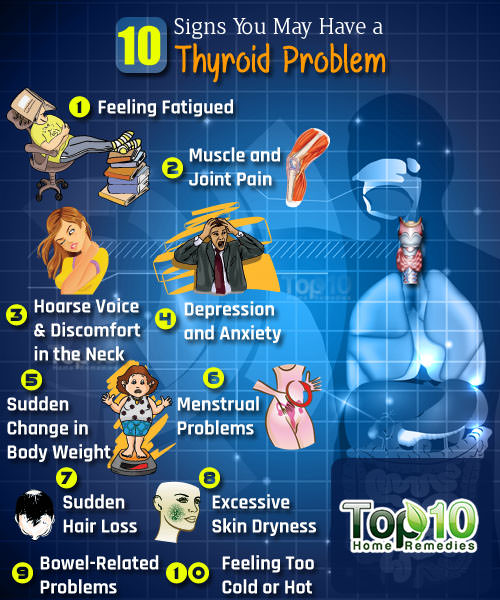
There are numerous indicators of an underlying thyroid problem. Here is our list of ten signs you should look out for:
 | |
1. Do You Feel Unusually Tired?
Feelings of exhaustion and unexplained levels of fatigue are common indicators of a thyroid problem. If you feel tired even though you have had a good night's sleep, it could be a sign of a underactive thyroid.
Alternatively, if you are suffering from an overactive thyroid, you may find it difficult to sleep at night and 'switch off', leaving you feeling tired and restless during the day.
| |
2. Have You Noticed a Sudden Change in Body Weight?
Unexplained weight gain can be a sign of an underactive thyroid. If you put on weight despite following a healthy living plan, it may indicate low levels of thyroid hormones. This can ensure the body is unable to 'burn' all the calories it consumes.
On the other hand, if you find you are losing weight despite not having made any other lifestyle changes, it could indicate that you have an overactive thyroid which is producing more hormones than the body needs. This can also lead to a decreased appetite.
| |
3. Are You Feeling Depressed or Anxious?

Are you experiencing depression, anxiety and panic attacks and can't explain why? These can also point to a thyroid problem.
Depression is linked to an underactive thyroid, while feelings of anxiety and sudden panic are common consequences of an Overactive Thyroid.
Depression and Anxiety can be caused by a number of factors and do not indicate a thyroid problem on their own, but you should look out for the signs.
| |
4. Have You Noticed a Change in Your Menstrual Cycle?
Women often experience issues related to their menstrual pattern if they have a thyroid problem. More prolonged periods including heavier bleeding and greater pain are often signs of an underactive Thyroid. Alternatively, shorter, more infrequent periods with blood flow can be attributed to an overactive thyroid.
| |
5. Are You Experiencing Unexplained Hair Loss?
Hair loss from the head as well as the eyebrows and other body parts can be a symptom of an underactive thyroid. Hair may also feel dry, coarse and brittle. Thinning hair around the crown and a dry, flaky scalp can also be signs of an overactive thyroid.
| |
6. Are You Feeling Overly Hot or Cold?
The thyroid contributes to the regulation of the body's temperature, so feelings of hot or cold which are not seemingly related to air temperature can be a sign of a problem. If you consistently have cold hands and feet or find yourself feeling chilly even when in a warm room, you could be suffering from an underactive thyroid.
Alternatively, if you find yourself sweating excessively or unable to tolerate normal levels of heat, it could be that you have an overactive thyroid.
| |
7. Do You Have Discomfort in Your Throat?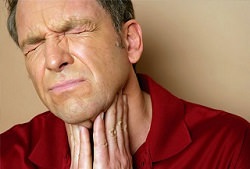
The thyroid is located in the neck, so direct pain can result from it swelling or becoming enlarged. An enflamed thyroid is called a goiter and can be caused by either an underactive thyroid or an overactive thyroid.
Other symptoms associated with the inflammation of the thyroid include a croaky or hoarse voice or an increase in snoring. | |
8. Do You Have Problems Digesting Food?
Digestive problems such as constipation, diarrhea or Irritable Bowel Syndrome may all relate to a badly functioning thyroid. The thyroid hormones directly impact bowel movements and inhibit the body's ability to process food and create waste. If you have a healthy diet but suffer from severe constipation, it could be linked to an underactive thyroid. Diarrhea and IBS, on the other hand, can point to an overactive thyroid.
| |
9. Is Your Skin Irritable?
The hormones released by the thyroid gland directly control the functioning of the skin. This means that skin complaints can often be attributed to underlying thyroid problems. If you have an underactive thyroid, your skin may change colour slightly, become drier and more scaly, and eczema can appear.
If you have an overactive thyroid, you tend to sweat more and your skin can become irritated and itchy.
| |
10. Do You Have Pain or Weakness In Your Muscles and Joints?

If you have unexplained weakness in your arms and legs, or noticeable aches and pains in your muscles and joints, you could have an underlying thyroid problem.
Cramps, stiffness and general joint pain in the arms and legs are all symptoms related to an underactive thyroid.
Muscle weakness, particularly in the thighs and upper arms are signs of an overactive thyroid. If you find it difficult to climb the stairs, lift your arms over your head or hold your hand steady, you could have an underlying issue.
| |
| See our Symptoms Checklist! | |
| So there are a number of signs that indicate a thyroid problem and if you are experiencing some of them, it may be worth asking your Doctor for a diagnosis. Compare any symptoms you may have with our checklist below and make sure you look after your health. | |
06 February 2018

03 February 2018




01 February 2018
These Habits Are Damaging Our Kidneys! - Astrologer Vighnesh
These
Habits Are Damaging Our Kidneys!
It's
hard to notice when we do our kidneys harm. Even if 80% damaged, kidneys can still do their job, and so we rarely realize they're struggling. Often, even common daily habits can cause your kidneys continual damage, and when you finally discover something's
wrong, it's too late.
Our
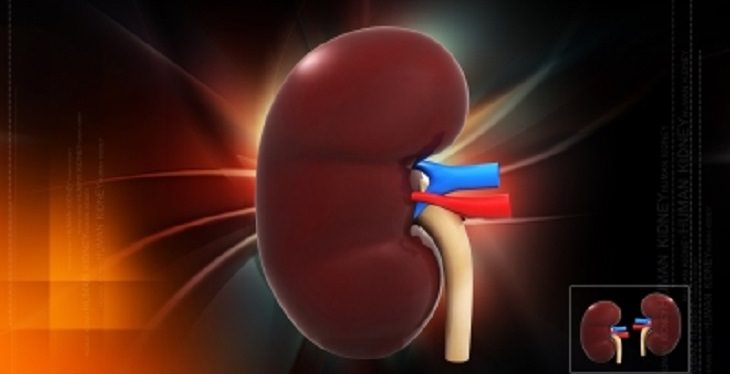
kidneys are incredible organs that work very hard. By themselves, they absorb minerals and nutrients, produce hormones, act as a filter for toxins in our blood, produce our urine and maintain a normal acid to alkaline ratio. We cannot live without our kidneys
functioning properly. The Chinese, for example, have looked at the kidneys as a site of essential life force for centuries.
If
you're serious about looking after yourself, then taking care of your kidneys should be one of your primary concerns. If you want to make sure your kidneys thrive and continue to serve you in the coming years ahead, here's a helpful list of habits you should
definitely avoid:
1.
Drinking Soda
A study conducted on employees working at Osaka University in Japan found that drinking 2 or more soda drinks a day (either diet or regular) may well be connected to a higher risk of kidney disease. The study included 12,000 people, and those who drank larger quantities of soda were found to have protein in their urine, which is one of the first signs of kidney damage. However, early detection can reverse the disease with proper treatment.
A study conducted on employees working at Osaka University in Japan found that drinking 2 or more soda drinks a day (either diet or regular) may well be connected to a higher risk of kidney disease. The study included 12,000 people, and those who drank larger quantities of soda were found to have protein in their urine, which is one of the first signs of kidney damage. However, early detection can reverse the disease with proper treatment.
2. A
Deficiency in Vitamin B6
The healthy function of our kidneys also depends on a healthy diet, especially one that contains certain nutrients. According to a study carried out at the University of Maryland, a vitamin B6 deficiency increases the risk of the formation of kidney stones. For healthy kidney function, a person should have at least 1.3 milligrams of vitamin B6 in their food every day.. The best sources for this vitamin are fish, beef liver, potatoes, starchy vegetables, chickpeas and non-citrus fruits.
The healthy function of our kidneys also depends on a healthy diet, especially one that contains certain nutrients. According to a study carried out at the University of Maryland, a vitamin B6 deficiency increases the risk of the formation of kidney stones. For healthy kidney function, a person should have at least 1.3 milligrams of vitamin B6 in their food every day.. The best sources for this vitamin are fish, beef liver, potatoes, starchy vegetables, chickpeas and non-citrus fruits.
3. Lack
of Exercise
Another good way of protecting your kidneys is to get some exercise. A comprehensive study published in 2013 in the Journal of the American Society of Nephrology found that postmenopausal women who exercised had a striking 31% less risk of developing kidney stones.
Another good way of protecting your kidneys is to get some exercise. A comprehensive study published in 2013 in the Journal of the American Society of Nephrology found that postmenopausal women who exercised had a striking 31% less risk of developing kidney stones.
4.
Smoking

Perhaps
not surprisingly, smoking has been linked to atherosclerosis - the narrowing and hardening of blood vessels - which influences the blood supply going to all the major organs, including the kidneys. According to a study published in Clinical Pharmacology
and Therapeutics, just smoking 2 cigarettes a day is enough to double the number of endothelial cells (the cells that line our blood vessel walls) present in your bloodstream. This is a sign of arterial damage.
5.
Magnesium Deficiency
Magnesium helps our body to slow down the absorption of calcium. If we don't get enough magnesium, we get overloaded in calcium and, once again, develop kidney stones. To prevent this from happening, add some leafy vegetables, seeds, nuts or beans to your diet. Another good source of magnesium is fresh avocados.
Magnesium helps our body to slow down the absorption of calcium. If we don't get enough magnesium, we get overloaded in calcium and, once again, develop kidney stones. To prevent this from happening, add some leafy vegetables, seeds, nuts or beans to your diet. Another good source of magnesium is fresh avocados.
6.
Not Drinking Enough Water
One of the most important things for our kidneys is for them to get hydrated enough to perform their functions. If we don't get enough water in our system, toxins start accumulating in our blood because there isn't enough fluid to take them through the kidneys. The National Kidney Foundation recommends drinking at least 10-12 glasses of water every day. An easy way to check if you're drinking enough is to make sure your urine is a light color or clear. If it's dark, you're not drinking enough.
One of the most important things for our kidneys is for them to get hydrated enough to perform their functions. If we don't get enough water in our system, toxins start accumulating in our blood because there isn't enough fluid to take them through the kidneys. The National Kidney Foundation recommends drinking at least 10-12 glasses of water every day. An easy way to check if you're drinking enough is to make sure your urine is a light color or clear. If it's dark, you're not drinking enough.
7.
Not Emptying Your Bladder Fast Enough
When you hear the call to pee, you should listen to it. Obviously, we're not always in the right situation to pee right when the need arises, but if you 'hold it in' on a regular basis, it will increase the pressure of urine on your kidneys, which can lead to renal failure or incontinence.
When you hear the call to pee, you should listen to it. Obviously, we're not always in the right situation to pee right when the need arises, but if you 'hold it in' on a regular basis, it will increase the pressure of urine on your kidneys, which can lead to renal failure or incontinence.
8.
Disrupted Sleep

I
just love a good night's sleep and, as it turns out, so do my kidneys. According to
Science Daily, a chronic disruption in our sleep can cause kidney disease. Dr. Michael Sole, Cardiologist and Professor of Medicine and Physiology at the University of Toronto, says kidney tissues get renewed during the night while we're sleeping,
so when we can't sleep without constant interruptions, our kidneys suffer direct damage.
9.
Having Too Much Sodium in Our Diet
Salt is an important nutrient, but it can cause a disaster when taken in excessive amounts. Over-consumption of sodium will raise your blood pressure and put a lot of strain on your kidneys. We recommend limiting yourselves to no more than 5.8 grams (0.2 ounces) of salt per day. So put down that salt shaker!
Salt is an important nutrient, but it can cause a disaster when taken in excessive amounts. Over-consumption of sodium will raise your blood pressure and put a lot of strain on your kidneys. We recommend limiting yourselves to no more than 5.8 grams (0.2 ounces) of salt per day. So put down that salt shaker!
10.
Consuming Too Much Caffeine
We usually drink more caffeine than we think we do. It's in coffee, tea, soft drinks and sodas - before you know it, your body is full of caffeine, which causes your blood pressure to shoot through the roof, and your kidneys to suffer damage.
We usually drink more caffeine than we think we do. It's in coffee, tea, soft drinks and sodas - before you know it, your body is full of caffeine, which causes your blood pressure to shoot through the roof, and your kidneys to suffer damage.
11.
Consuming Too Much Protein
According to a study conducted at Harvard University, an overdose of protein in our diet can cause our kidneys damage. When we digest protein, our body produces a byproduct - ammonia. Ammonia is a toxin that your already hardworking kidneys need to neutralize. This means that the more protein we consume, the harder we make our kidneys work, which can eventually lead to kidney failure.
According to a study conducted at Harvard University, an overdose of protein in our diet can cause our kidneys damage. When we digest protein, our body produces a byproduct - ammonia. Ammonia is a toxin that your already hardworking kidneys need to neutralize. This means that the more protein we consume, the harder we make our kidneys work, which can eventually lead to kidney failure.
12.
Abusing Pain-Killers

Many
of us have a daily routine of taking medications. When we suffer from pain, our first reaction is usually to swallow a pill. They do help the pain, but you should think twice before taking too many. All pharmaceutical drugs have side effects, and many of them
cause kidney or liver damage. That said, some drugs SHOULD be taken, which brings us to my next point...
13.
Not Taking Certain Drugs You Need
If you suffer from high blood pressure and/or type 2 diabetes, two very common conditions these days, you will probably also suffer kidney damage. Don't leave these conditions untreated - take your daily meds to reduce your blood pressure and control your insulin levels. Without them, you're almost guaranteed to suffer kidney damage.
If you suffer from high blood pressure and/or type 2 diabetes, two very common conditions these days, you will probably also suffer kidney damage. Don't leave these conditions untreated - take your daily meds to reduce your blood pressure and control your insulin levels. Without them, you're almost guaranteed to suffer kidney damage.
14.
Not Treating Common Infections
Sometimes, we all get lazy and ignore a simple cold or a flu, which can push our body to the brink of exhaustion. Studies have shown, however, that people who do not rest or treat their infections often end up with kidney disease.
Sometimes, we all get lazy and ignore a simple cold or a flu, which can push our body to the brink of exhaustion. Studies have shown, however, that people who do not rest or treat their infections often end up with kidney disease.
15.
Consuming Too Much Alcohol
Now this is a no-brainer. The toxins in alcohol not only damage the liver, like many believe, but they are also something your kidneys simply hate to deal with. According to Kidney Health Australia and the American Kidney Fund, one good way of avoiding kidney failure is drinking alcohol in moderation.
Now this is a no-brainer. The toxins in alcohol not only damage the liver, like many believe, but they are also something your kidneys simply hate to deal with. According to Kidney Health Australia and the American Kidney Fund, one good way of avoiding kidney failure is drinking alcohol in moderation.